
MAC REAL ESTATE SERVICES
Frequently Asked Questions
Your Mortgage Questions, Answered by 25 Years of Local Expertise
RocklinBroker.com | Rocklin, California
At MAC Real Estate Services, we believe informed borrowers make confident decisions. Whether you’re buying your first home in Rocklin, refinancing in Sacramento, or investing across Placer County, these answers reflect 25 years of hands-on mortgage experience in the communities we serve. Don’t see your question? Call us directly — no call centers, no runaround.
Getting Started & Pre-Approval
What is mortgage pre-approval, and why do I need it?
Pre-approval is a lender’s written commitment that you qualify for a specific loan amount based on your income, credit, and assets. In the Rocklin and Sacramento markets, where homes sell in 16–21 days, a pre-approval letter shows sellers you’re serious and financially ready. Without it, most listing agents won’t even present your offer.
How long does pre-approval take at MAC Real Estate?
We can issue a pre-approval within 24 hours once we have your documentation. Apply online at RocklinBroker.com, upload your pay stubs, W-2s, and bank statements, and we’ll get to work immediately. Speed matters in competitive markets — we treat every application with urgency.
What documents do I need for pre-approval?
Most borrowers need:
- Two most recent pay stubs
- W-2s or tax returns from the last two years
- Two months of bank statements
- Valid government-issued ID
- Documentation for additional income (rental income, bonuses, etc.)
Self-employed borrowers typically provide full tax returns and a profit-and-loss statement.
Does pre-approval guarantee I’ll get the loan?
Pre-approval is a strong indicator, not a guarantee. Final approval depends on the property appraisal, title review, and verification that your financial situation hasn’t changed. That’s why we advise borrowers not to change jobs, open new credit accounts, or make large purchases during the process.
How long is a pre-approval letter valid?
Most pre-approval letters are valid for 60–90 days. If yours expires before you find a home, we can quickly re-verify your information and issue an updated letter. Market conditions and rates may change, so an updated letter also ensures your numbers are current.
Is there a difference between pre-qualification and pre-approval?
Yes. Pre-qualification is an informal estimate based on self-reported information — it carries little weight with sellers. Pre-approval involves a full credit check, income verification, and underwriter review. In competitive markets like Rocklin and Roseville, you want pre-approval, not pre-qualification.
Does applying for pre-approval hurt my credit score?
A pre-approval triggers a hard credit inquiry, which may lower your score by a few points temporarily. However, credit bureaus treat multiple mortgage inquiries within a 14–45 day window as a single inquiry, so shopping for rates is encouraged and won’t damage your score if done within that timeframe.
Can I get pre-approved if I already own a home?
Absolutely. Whether you’re buying a second home, an investment property, or planning to sell your current home and purchase a new one, we can pre-approve you. We’ll factor in your existing mortgage obligations and help you understand your options for timing the transactions.
Loan Programs & Options
What types of mortgage loans does MAC Real Estate offer?
We offer the full range of residential mortgage products: Conventional loans, FHA loans, VA loans, USDA loans, Jumbo loans, DSCR (Debt Service Coverage Ratio) loans for investors, bank statement loans for self-employed borrowers, and refinance options. As a mortgage broker, we work with multiple wholesale lenders to find the best fit for your situation — we’re not limited to one bank’s products.
What is an FHA loan, and who is it for?
FHA loans are government-insured mortgages designed for borrowers with lower credit scores or smaller down payments. You can qualify with a credit score as low as 580 and put down as little as 3.5%. They’re popular with first-time buyers in the Sacramento region who have solid income but haven’t built a large savings yet. The trade-off is mortgage insurance premium (MIP) for the life of the loan.
What is a VA loan, and do I qualify?
VA loans are available to active-duty military, veterans, and eligible surviving spouses. They offer zero down payment, no private mortgage insurance, and competitive interest rates. Sacramento has a strong military community near several bases, and we’ve helped hundreds of veterans use this powerful benefit. You’ll need a Certificate of Eligibility (COE), which we can help you obtain.
What is a Conventional loan?
Conventional loans are not government-insured and typically require a credit score of 620 or higher. First-time buyers can put down as little as 3%, and PMI (private mortgage insurance) drops off once you reach 20% equity. For borrowers with good credit, conventional loans often offer the best rates and most flexibility.
What is a Jumbo loan?
Jumbo loans exceed the conforming loan limit set by the Federal Housing Finance Agency. In most areas, the 2025 conforming limit is $806,500, but in high-cost counties like Alameda or Santa Clara, it can reach $1,209,750. In Placer County, the 2025 conforming limit is $806,500, so loans above that amount require jumbo financing with slightly different qualification criteria — typically higher credit scores and larger reserves.
What is a DSCR loan?
DSCR (Debt Service Coverage Ratio) loans are designed for real estate investors. Instead of qualifying based on your personal income, the lender evaluates whether the property’s rental income covers the mortgage payment. This is ideal for investors building a portfolio who may not show enough W-2 income to qualify traditionally. MAC specializes in DSCR loans for investors across the Sacramento region.
What is a bank statement loan?
Bank statement loans allow self-employed borrowers to qualify using 12–24 months of personal or business bank statements instead of traditional tax returns. If you’re a business owner, freelancer, or 1099 contractor whose tax returns don’t reflect your true earning power, this program can be a game-changer.
What is the difference between a fixed-rate and adjustable-rate mortgage?
A fixed-rate mortgage locks your interest rate for the entire loan term — your payment never changes. An adjustable-rate mortgage (ARM) starts with a lower rate for a fixed period (usually 5, 7, or 10 years), then adjusts periodically based on market indices. ARMs can save money if you plan to sell or refinance within the fixed period, but carry the risk of higher payments later.
Can MAC help with investment property loans?
Yes. We finance single-family rentals, multi-unit properties (2–4 units), and we offer DSCR loans that qualify based on rental income rather than personal income. Whether you’re buying your first rental in Rocklin or expanding a portfolio across Sacramento, we have programs designed for investors.
Do you offer construction or renovation loans?
We offer select renovation loan products, including FHA 203(k) loans that let you finance both the purchase and renovation costs in a single mortgage. For ground-up construction loans, we can connect you with lending partners who specialize in that space and coordinate the permanent financing once construction is complete.
| Loan Program | Min. Down Payment | Min. Credit Score | Best For |
|---|---|---|---|
| Conventional | 3% | 620 | Borrowers with good credit seeking best rates |
| FHA | 3.5% | 580 | First-time buyers, lower credit scores |
| VA | 0% | 620 (typical) | Active-duty military, veterans, surviving spouses |
| USDA | 0% | 640 (typical) | Rural and suburban properties, income-eligible buyers |
| Jumbo | 10–20% | 700+ | Loan amounts above $806,500 (Placer County) |
| DSCR | 20–25% | 660+ | Real estate investors qualifying on rental income |
| Bank Statement | 10–20% | 620+ | Self-employed borrowers, business owners |
Credit & Qualification
What credit score do I need to buy a home?
It depends on the loan program. FHA loans require a minimum of 580 (or 500 with 10% down). Conventional loans typically require 620. VA loans have no official minimum, but most lenders look for 620+. Higher scores get better rates, but don’t assume you can’t qualify — we work with borrowers across the credit spectrum and can advise you on how to improve your score quickly.
How can I improve my credit score before applying?
The fastest ways to boost your score: pay down credit card balances to below 30% of your limit, don’t open new accounts, dispute any errors on your credit report, and make all payments on time. We offer a free credit review and can provide a specific action plan tailored to your situation. Some borrowers improve 40–60 points in just 30–60 days with the right strategy.
How much debt can I have and still qualify for a mortgage?
Lenders use your debt-to-income ratio (DTI) — the percentage of your gross monthly income that goes toward debt payments. Most conventional loans allow up to 45–50% DTI, while FHA may go higher with compensating factors. We calculate your DTI during pre-approval and help you understand exactly how much home you can afford.
Will student loans prevent me from getting a mortgage?
No, but they factor into your DTI ratio. If you’re on an income-driven repayment plan, we use the actual monthly payment for qualification. For deferred loans, lenders typically use 0.5–1% of the total balance as the assumed monthly payment. We’ve helped many borrowers with student loan debt successfully qualify for mortgages.
Can I buy a home if I had a bankruptcy or foreclosure?
Yes, with waiting periods. After a Chapter 7 bankruptcy, you can qualify for an FHA loan in 2 years and a conventional loan in 4 years. After a foreclosure, the waiting period is 3 years for FHA and 7 years for conventional. VA loans require 2 years after either event. We’ll evaluate your specific timeline and help you prepare.
Does my spouse’s credit score matter if we apply together?
If both spouses are on the application, the lender uses the lower of the two middle scores for qualification. If one spouse has significantly lower credit, it may be strategic for only the higher-scoring spouse to apply — provided they have enough income to qualify alone. We analyze both scenarios and recommend the best approach.
Down Payment & Costs
How much down payment do I need to buy a home?
It varies by loan program. Conventional loans start at 3% down for first-time buyers. FHA requires 3.5%. VA and USDA loans offer zero down payment. For a median-priced Rocklin home around $705,000, a 3% down payment would be approximately $21,150. We’ll walk you through every option and help you understand the trade-offs between down payment size, monthly payment, and mortgage insurance.
Are there down payment assistance programs in Placer County?
Yes. Placer County offers a First-Time Homebuyer Loan Program for eligible households purchasing in unincorporated areas. The California Housing Finance Agency (CalHFA) also offers statewide programs including MyHome Assistance and the California Dream For All program. Income limits and availability change, so we check current program status for every qualifying buyer.
What are closing costs, and how much should I expect?
Closing costs typically range from 2–5% of the loan amount and include lender fees, appraisal, title insurance, escrow fees, prepaid property taxes, and homeowner’s insurance. On a $700,000 purchase in Rocklin, expect approximately $14,000–$35,000 in closing costs. We provide a detailed Loan Estimate early in the process so there are no surprises.
Can the seller pay my closing costs?
Yes, sellers can contribute toward your closing costs — this is called a seller concession. The amount allowed depends on the loan type: conventional loans allow up to 3–9% depending on down payment, FHA allows up to 6%, and VA allows up to 4%. In a competitive market, seller concessions may weaken your offer, but in a balanced or buyer’s market, they’re a smart negotiating tool.
What is private mortgage insurance (PMI)?
PMI is required on conventional loans when your down payment is less than 20%. It protects the lender — not you — in case of default. Monthly PMI costs typically range from 0.3–1.5% of the loan amount annually. The good news: PMI on conventional loans can be removed once you reach 20% equity. FHA mortgage insurance, by contrast, stays for the life of the loan unless you refinance to a conventional loan.
Can I use gift funds for my down payment?
Yes, most loan programs allow gift funds from family members, and some allow gifts from employers or non-profit organizations. FHA, VA, and conventional loans all permit gift funds with proper documentation — a gift letter confirming the funds are a gift, not a loan, and verification of the donor’s ability to give. We’ll guide you through the documentation requirements.
The Mortgage Process & Timeline
How long does the mortgage process take from application to closing?
A typical purchase transaction takes 30–45 days from accepted offer to closing. Refinances can close in 21–30 days. Timelines depend on loan type, property type, and how quickly documentation is provided. At MAC, we pride ourselves on clear communication and fast turnaround — we don’t let files sit.
What happens after I submit my mortgage application?
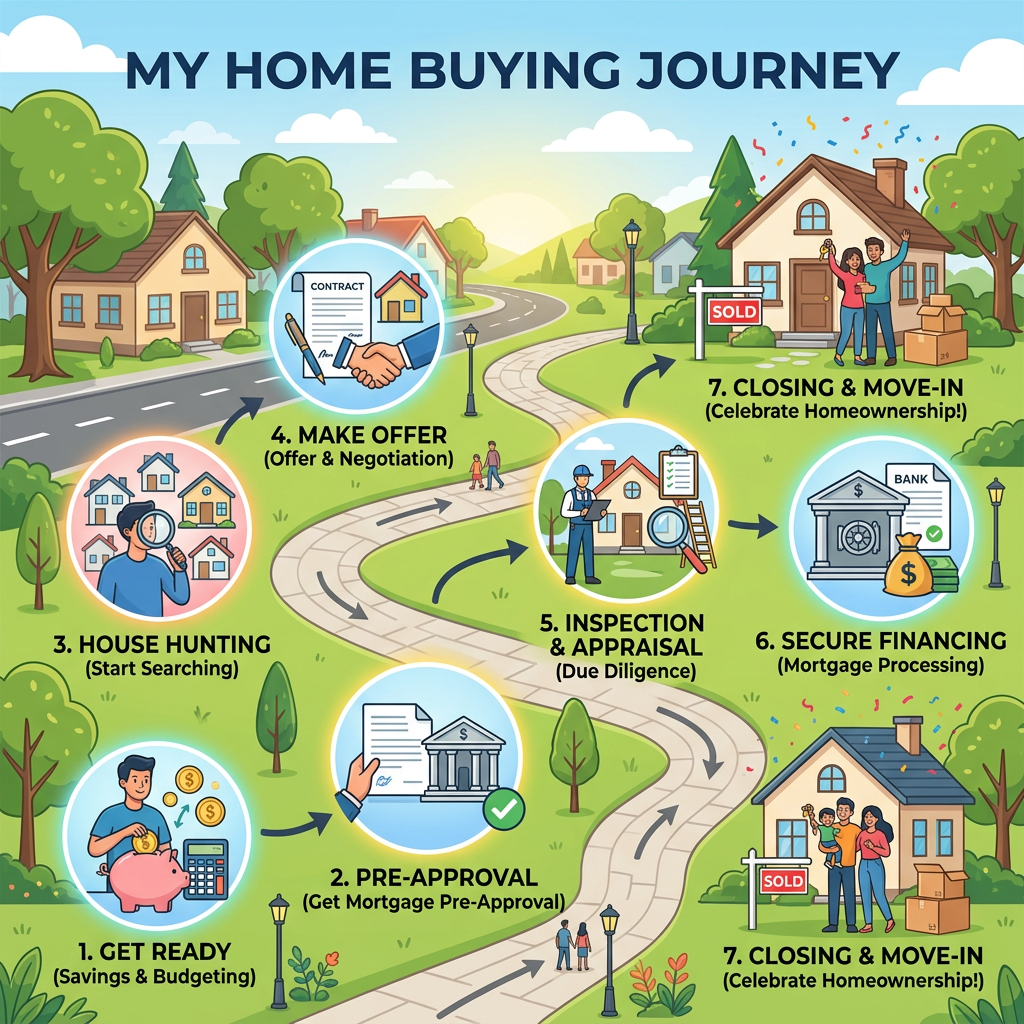
Here’s the process:
- Application review and pre-approval within 24 hours.
- We shop rates across our wholesale lender network to find the best terms.
- Loan is submitted to underwriting for review.
- Appraisal is ordered on the property.
- Underwriter issues conditional approval with any remaining items needed.
- Final conditions are cleared and loan is approved.
- Closing documents are prepared and you sign at the title company.
- Funding and recording — the home is officially yours.
What is underwriting?
Underwriting is the lender’s formal review of your financial profile and the property to determine whether the loan meets their guidelines. The underwriter verifies your income, assets, credit, employment, and the property’s appraised value. This is where thoroughness matters — and where having an experienced broker like MAC makes a difference. We prepare files to underwriting standards before submission to minimize delays.
What is an appraisal, and who pays for it?
An appraisal is an independent assessment of the property’s market value, ordered by the lender to ensure they’re not lending more than the home is worth. The buyer typically pays for the appraisal, which costs $450–$750 in the Sacramento area. If the appraisal comes in below the purchase price, we help you navigate your options: renegotiate the price, challenge the appraisal, make up the difference, or walk away if your contract allows it.
What should I avoid doing during the mortgage process?
⚠️ Critical — Protect Your Approval
Do NOT: change jobs or quit your job, make large deposits or withdrawals without a paper trail, open new credit cards or finance any purchases (cars, furniture, appliances), co-sign for anyone, or miss any payment deadlines. Any of these can delay or derail your approval. If in doubt, call us before making any financial moves.
Can I lock my interest rate?
Yes. A rate lock freezes your interest rate for a set period — typically 15, 30, 45, or 60 days. Once locked, your rate won’t increase even if market rates rise. At MAC, we monitor rates daily and advise you on the best time to lock. If rates drop significantly after locking, we explore float-down options when available.
Refinancing
When does refinancing make sense?
Refinancing typically makes sense when you can lower your interest rate by at least 0.5–0.75%, shorten your loan term, eliminate mortgage insurance, or access equity for home improvements or debt consolidation. We run a break-even analysis to ensure the savings outweigh the closing costs — refinancing should always make financial sense, not just feel like a good idea.
What is a cash-out refinance?
A cash-out refinance replaces your current mortgage with a larger one, and you receive the difference in cash. For example, if your home is worth $750,000 and you owe $400,000, you could refinance for $550,000 and receive $150,000 in cash (minus closing costs). This is commonly used for home renovations, debt consolidation, or investment opportunities. Most programs allow cash-out up to 80% of your home’s value.
How much does it cost to refinance?
Refinancing closing costs typically range from 1.5–3% of the new loan amount. On a $500,000 refinance, expect $7,500–$15,000 in costs. Some lenders offer “no-cost” refinances by rolling the costs into a slightly higher rate. We present all options transparently so you can compare total cost over time.
Can I refinance if I have less than 20% equity?
Yes, though your options vary. Conventional refinances are possible with less than 20% equity, but you’ll need to pay PMI. FHA offers the Streamline Refinance with minimal equity requirements. VA offers the Interest Rate Reduction Refinance Loan (IRRRL) with no appraisal required. We assess your equity position and recommend the most cost-effective path.
How long do I need to wait before refinancing?
For a conventional rate-and-term refinance, there’s typically no waiting period if you’re current on payments. FHA Streamline requires at least 210 days since closing and six on-time payments. Cash-out refinances generally require 6–12 months of ownership. We check your loan type, timing, and goals to advise whether refinancing makes sense now or if you should wait.
Local Market — Rocklin & Sacramento
What is the current housing market like in Rocklin, CA?
Rocklin remains one of the most desirable communities in the Sacramento region. The median home price is approximately $705,000, with homes selling in an average of 16–21 days. Prices have grown roughly 8% year-over-year. Inventory remains tight, which means buyers need strong pre-approvals and competitive offers. We monitor the local market daily and provide clients with current, actionable data.
Why choose a local mortgage broker in Rocklin instead of a big bank?
Three reasons: speed, selection, and service. Big banks offer only their own products — we shop across dozens of wholesale lenders to find the best rate and program for you. Our turnaround is faster because you work directly with the decision-maker, not a call center. And after 25 years serving Rocklin, Roseville, Lincoln, Loomis, and the greater Sacramento region, we understand the local market, the local appraisers, and the local escrow and title companies. That knowledge translates into smoother closings.
What areas does MAC Real Estate Services serve?
We serve the entire Sacramento metropolitan area with a focus on Placer County, including Rocklin, Roseville, Lincoln, Loomis, Granite Bay, and Auburn. We also serve Sacramento, Elk Grove, Folsom, El Dorado Hills, Rancho Cordova, Citrus Heights, and surrounding communities. As a licensed California mortgage broker, we can originate loans statewide.
Are there special programs for first-time homebuyers in the Sacramento area?
Yes. Several programs are available: the Placer County First-Time Homebuyer Loan Program (for unincorporated Placer County, subject to funding availability and income limits), CalHFA MyHome Assistance Program (up to 3.5% of the purchase price for down payment or closing costs), the California Dream For All Shared Appreciation Loan, and various conventional and FHA first-time buyer programs with as little as 3–3.5% down. We evaluate every applicable program for each buyer and stack benefits when possible.
What should I know about buying in a competitive Sacramento-area market?
Be prepared before you start looking. Get fully pre-approved (not pre-qualified), know your budget including closing costs, and be ready to act fast — strong homes in Rocklin and Roseville can receive multiple offers within days. Work with an experienced Realtor, have your proof of funds ready, and consider strategies like escalation clauses or flexible closing timelines. We coordinate closely with your agent to make your offer as strong as possible.
About MAC Real Estate Services
What makes MAC Real Estate Services different from other mortgage companies?
Three things set us apart. First, 25 years of local expertise — we’ve closed thousands of loans in the Rocklin and Sacramento markets and know the landscape inside and out. Second, as a mortgage broker, we shop across multiple wholesale lenders to find you the best rate and program — you’re not limited to one bank’s offerings. Third, you work directly with Ranjit and the MAC team — no call centers, no transfers, no getting lost in the system.
Is MAC Real Estate Services a bank or a mortgage broker?
We are a mortgage broker, which means we work for you, not for a bank. We partner with multiple wholesale lenders and can compare loan programs, rates, and terms across them to find the best fit for your situation. This gives you more options and often better pricing than going directly to a single bank.
Does MAC offer services in languages other than English?
Yes. We proudly serve a diverse community and offer mortgage consultation in English, Hindi, and Punjabi. Our multicultural approach ensures every client receives clear, comfortable communication throughout the mortgage process. We understand the unique needs of our South Asian and multicultural communities in the Sacramento region.
How do I get started with MAC Real Estate Services?
Three ways to start:
- Apply online at RocklinBroker.com — our secure application takes about 15 minutes.
- Call us directly for a free consultation — we’ll discuss your goals, timeline, and answer any questions.
- Visit our Rocklin office by appointment.
There’s no cost and no obligation for an initial consultation.
Does MAC work with Realtors?
Absolutely. We partner with Realtors across the Sacramento region and offer co-branded marketing support, fast pre-approvals for their buyers, CRM assistance, and joint educational events. If you’re a Realtor looking for a reliable lending partner, visit RocklinBroker.com/partner or contact us directly.
What technology does MAC use to make the process easier?
We use industry-leading tools to streamline your experience. Our platform allows secure online applications, electronic document uploads, real-time loan status tracking, and e-signatures. We integrate with systems like Zip and LSX for efficient loan processing, and our website at RocklinBroker.com provides mortgage calculators, educational resources, and a secure client portal.
Additional Important Questions
Can I buy a home if I’m self-employed?
Yes. Self-employed borrowers have excellent options including bank statement loans (qualifying on 12–24 months of deposits rather than tax returns), conventional loans with full tax documentation, and DSCR loans for investment properties. Self-employment requires a bit more documentation, but we specialize in structuring files for self-employed clients and have helped hundreds of business owners secure financing.
What is escrow, and how does it work?
Escrow is a neutral third-party account that holds funds and documents during the transaction until all conditions are met. Once your offer is accepted, your earnest money deposit goes into escrow. At closing, the escrow company ensures all funds are distributed correctly — your down payment and closing costs to the seller and service providers, and the loan funds from your lender. After closing, your lender may also maintain an escrow account to collect monthly property tax and insurance payments alongside your mortgage.
How are property taxes handled in my mortgage?
Most lenders collect property taxes as part of your monthly mortgage payment through an escrow account. Your lender estimates the annual tax amount, divides it by 12, and adds it to your principal, interest, and insurance payment. In Placer County, the base property tax rate is approximately 1% of the assessed value, plus any voter-approved bonds or special assessments. Your total monthly housing payment includes principal, interest, taxes, and insurance — known as PITI.
Can MAC help me if another lender denied my loan?
Yes — this is one of our strengths. As a broker with access to multiple lenders, we often find solutions when a single bank says no. Perhaps your file fits better with a different lender’s guidelines, or a different loan program is the right fit. We review denied applications at no charge and provide honest guidance on whether we can help — and if not, exactly what needs to change before you can qualify.
Still have questions? We’re here to help.
MAC Real Estate Services
Rocklin, California
Serving Rocklin, Roseville, Sacramento, Placer County & Beyond
25 Years of Mortgage Expertise
“No call centers. No runaround. Just answers.”